


Disclaimer: This article is not intended to offend any community or identity. Its purpose is to challenge dangerous narratives and provoke serious reflection about Pakistan’s future.
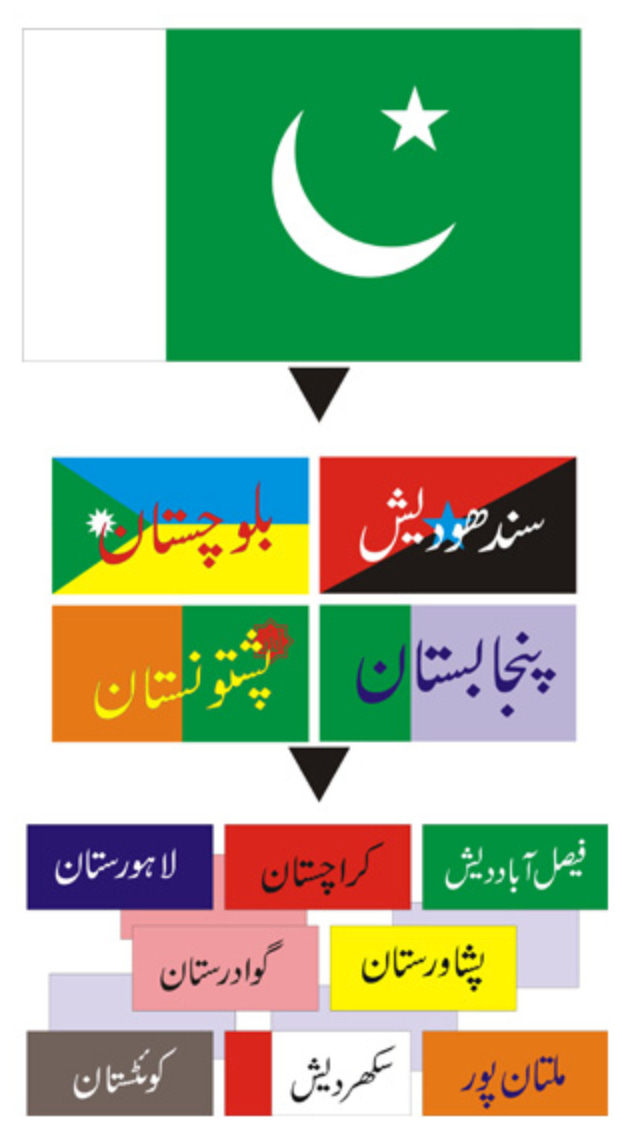
Pakistan was not meant to be reduced to a patchwork of competing ethnic homelands. It was never meant to fragment endlessly along lines of language, tribe, caste, or regional identity. Yet today, ethnonationalist narratives are pushing exactly in that direction, presenting separation as liberation and division as justice.
The argument usually goes like this: different languages, different cultures, different histories… therefore different states. But this logic collapses the moment it is applied consistently. Even within Punjab, Sindh, Khyber Pakhtunkhwa, or Balochistan, people speak differently, live differently, and identify differently. Faisalabadi Punjabi dialect is different than Lahori Punjabi. Karachi is not interior Sindh. Peshawar is not Chitral. If difference alone justifies separation, then why stop at provinces? Why not divide cities, districts, neighborhoods?
Following this path leads nowhere except instability, conflict, and permanent fragmentation.
Ethnonationalism replaces one form of domination with another. It does not dismantle injustice, it redraws borders around it. Ordinary people are told that their suffering is caused by “other ethnic groups” rather than by unequal power structures, elite capture of resources, militarization, and systemic economic injustice. This misdirection benefits those who already hold power while setting communities against one another.
What Pakistan needs is not endless division, but a radically reimagined federation.
A federation grounded in social justice, where:
Every individual has equal rights, regardless of religion, caste, creed, tribe, ethnicity, or language
Resources are distributed fairly rather than hoarded by elites
Provinces and regions have genuine autonomy
Cultural and linguistic diversity is protected without weaponizing identity
Breaking the country apart will not magically produce justice. Justice comes from dismantling discrimination, ending exploitation, and building political systems that serve people rather than identities.
Those who promote internal hatred, romanticize secession without addressing class, power, and inequality, or encourage people to fight those they live alongside are not offering liberation, they are offering chaos. Convincing people to turn against one another for ideological fame or political relevance is reckless and destructive.
Pakistan’s future does not lie in carving the map into smaller and smaller pieces. It lies in building a shared political community where difference is respected, inequality is confronted, and no one’s rights depend on where they come from or what language they speak.
Last updated on: the blog post was updated on 07.02.2026 to improve grammar, tone, style, and to better reflect the author’s present positions.
Archival note: A version of this post was originally published on the now-defunct blog guppu.com. It is being republished here solely for archival purposes.